How Pizzle Is Made: From Farm to Dog Chew
As a canine nutrition expert, I am frequently asked about the safety and origin of the treats we provide our companions. Among the most popular—and sometimes most misunderstood—items in the pet store is the "pizzle" or "bully stick." While many owners are initially surprised to learn What Is Pizzle?, they quickly discover that it is one of the most nutritionally sound and highly digestible chews available today.
Understanding the journey of a pizzle chew from the farm to your dog’s mouth is essential for any responsible owner. The manufacturing process dictates not only the safety of the product but also its nutritional value and "shelf appeal."
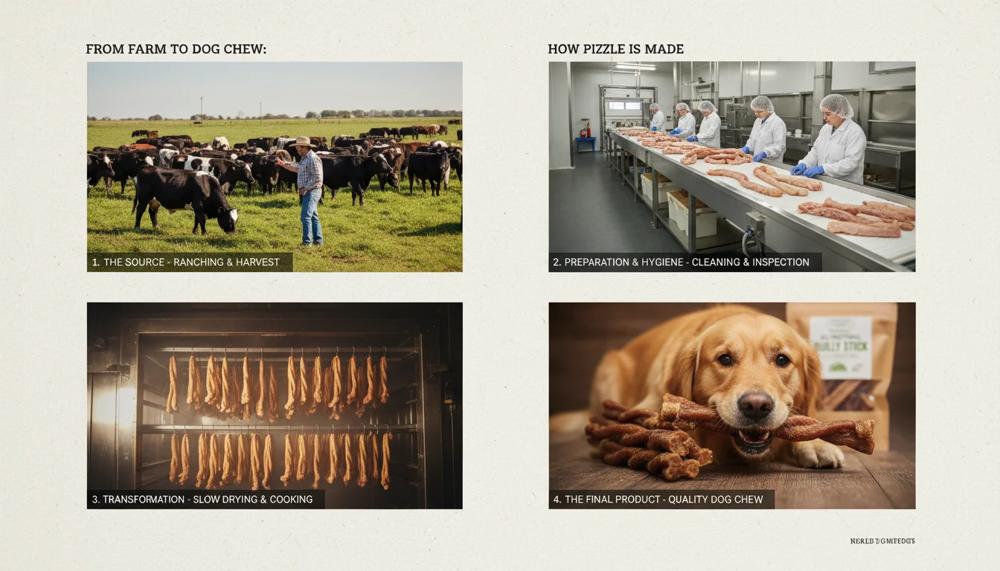
Step 1: Sourcing the Raw Material
The process begins at the farm or ranch. Pizzle is a 100% natural byproduct of the beef industry. Specifically, it is the penis of a bull. By utilizing this part of the animal, the industry ensures that very little of the animal goes to waste, making it a sustainable choice for environmentally conscious pet owners.
Quality starts at the source. Many premium manufacturers distinguish between Grass-Fed vs Grain-Fed Pizzle. Generally, Grass-Fed Bully Sticks are preferred by nutritionists because they often come from cattle raised without the use of supplemental hormones or routine antibiotics. This results in a Single-Ingredient Dog Chew Explained as a pure, high-protein snack.
Step 2: Cleaning and Preparation
Once the raw material is harvested, it undergoes a rigorous cleaning process. This is a critical stage for food safety. The pizzles are washed thoroughly in water to remove any blood or impurities.
During this stage, manufacturers must decide on the final shape of the product. While the raw material is still pliable, it can be manipulated into various forms: * Straight: The most common form, hung vertically to dry. * Braided: Three pieces are woven together to create a denser, more challenging chew. You can learn more about whether Braided Bully Sticks: Are They Worth It? for your specific dog. * Curly: Wrapped around a rod during the drying process to create a spiral shape. Owners often choose Straight vs Curly Pizzle based on their dog’s chewing style.
Step 3: The Drying and Curing Process
The "magic" of making a high-quality dog chew happens in the drying room. Pizzle is not "cooked" in the traditional sense; rather, it is slowly dehydrated or "cured."
Temperature Control
The temperature must be high enough to kill harmful bacteria like Salmonella or E. coli, but low enough to preserve the integrity of the protein and prevent the chew from becoming brittle. This slow-drying process is why Is Pizzle Digestible? compared to rawhide; the protein remains in a state that the canine stomach can easily break down.
Odor Management
One of the biggest complaints from dog owners is the smell of bully sticks. The odor is primarily caused by moisture and blood trapped within the pizzle during the drying process. * Standard Pizzle: Dried for a shorter period, retaining some moisture and a stronger scent that dogs find irresistible. * Odor-Free Pizzle: Dried for a significantly longer period to ensure nearly zero moisture remains. When considering Odor-Free Bully Sticks: Are They Healthier?, the answer is usually that they are simply more processed via heat, which removes the scent but maintains the nutrition.
Step 4: Cutting and Quality Control
After the drying process is complete, the pizzles are long, hard "canes" (often up to 36 inches). They are then moved to the cutting station where they are measured into standard lengths, typically 6-inch or 12-inch sticks.
This is also where Thick vs Thin Bully Sticks are sorted. Bulls vary in size, and naturally, the thickness of the pizzle varies as well. Thicker sticks are sorted for Best Bully Sticks for Large / Aggressive Chewers, while thinner ones are packaged as Best Bully Sticks for Small Dogs.
Finally, the product is inspected for "doneness." A properly dried pizzle should be extremely hard. If it feels soft or spongy, it may not have been dried long enough, which can lead to mold or bacterial growth. This is a key factor in How to Spot Low-Quality or Fake Pizzle.
Why the Manufacturing Process Matters
As a veterinary consultant, I emphasize the process because it directly impacts safety. Unlike rawhide, which is often treated with lye or bleach, high-quality pizzle is processed using only heat and air. This is why Pizzle vs Rawhide: Which Is Safer? is a common discussion in vet clinics; pizzle provides mechanical abrasion for dental health without the risk of internal blockages associated with indigestible hides.
Safety Precautions for Owners
Even the highest quality, most carefully manufactured pizzle requires owner diligence.
- Supervision is Mandatory: Even though pizzle is highly digestible, any chew can become a choking hazard if a dog tries to swallow a large "nub" at the end.
- Use a Holder: To mitigate risks, consider using Best Holders to Prevent Swallowing.
- Know When to Toss: When the stick is small enough to be swallowed whole, take it away. What to Do If Your Dog Swallows a Large Piece involves immediate monitoring and potentially a call to your vet.
- Fresh Water: Chewing increases thirst. Always ensure your dog has access to clean water.
- Calorie Awareness: Pizzle is calorie-dense. Check the Calories in Pizzle Chews (By Size) to ensure you aren't overfeeding, and consult How Many Bully Sticks Can a Dog Have Per Week? to maintain a balanced diet.
Veterinary Consensus
The general Vet Opinions on Bully Sticks are overwhelmingly positive, provided they are sourced from reputable manufacturers. They are praised for being High in Protein and for their ability to reduce plaque and tartar buildup through the mechanical action of chewing. However, vets always caution that they should be treated as a treat, not a meal replacement.
Summary: Key Takeaways
- Natural Origin: Pizzle is a single-ingredient beef byproduct, making it a sustainable and high-protein snack.
- Safe Processing: Quality sticks are cleaned with water and air-dried at specific temperatures to kill bacteria without chemicals.
- Digestibility: Unlike rawhide, pizzle is fully digestible, reducing the risk of gastrointestinal blockages.
- Odor Control: "Odor-free" varieties are simply dried longer to remove the moisture that causes scent.
- Safety First: Always supervise your dog, use a holder if necessary, and choose the correct size based on your dog's weight and chewing style.
By understanding How to Choose High-Quality Pizzle, you can provide your dog with a rewarding, healthy, and safe chewing experience that supports their dental health and natural instincts.