Best Holders to Prevent Swallowing: A Guide to Safe Chewing
As a canine nutrition expert and veterinary consultant, I am frequently asked about the safety of high-protein, natural treats. While Natural Dog Chews Compared often show that single-ingredient options like pizzle are superior to processed alternatives, they are not without risks. The primary concern for most pet parents is the "last inch"—that small, softened nub of a treat that a dog might attempt to swallow whole.
This behavior, often referred to as "gulping," can lead to serious medical emergencies. To mitigate this, the pet industry has developed various safety holders designed to secure the chew and prevent accidental ingestion. This article explores the mechanics of these holders, why they are essential for certain chewers, and how to choose the right one for your dog.
Why Dogs Swallow the End of Their Chews
To understand why a holder is necessary, we must look at canine biology. Dogs are evolutionarily programmed to consume "prey" quickly to prevent other scavengers from stealing it. This instinct remains strong in many domestic dogs, particularly those classified as "aggressive chewers."
When a treat like a bully stick—which you may know from our guide [What Is Pizzle? (Bull Penis Explained for Dog Owners)](what-is-pizzle-(bull-penis-explained-for-dog-owner.html)—becomes small enough to fit entirely inside the mouth, the dog’s swallowing reflex often overrides their chewing instinct.
The Risks of Gulping
If a dog swallows a large fragment, several issues can arise: 1. Choking: The piece may lodge in the esophagus. For a detailed breakdown of this risk, see Can Pizzle Cause Choking?. 2. Gastrointestinal Obstruction: While many ask Is Pizzle Digestible? (the answer is yes), a large, unchewed chunk takes much longer to break down in the stomach. If it passes into the small intestine before softening, it can cause a blockage. 3. Regurgitation: Dogs may vomit the piece back up, which carries a risk of aspiration pneumonia.
If your dog has already ingested a large portion, please refer to our emergency guide: What to Do If Your Dog Swallows a Large Piece.
How Safety Holders Work
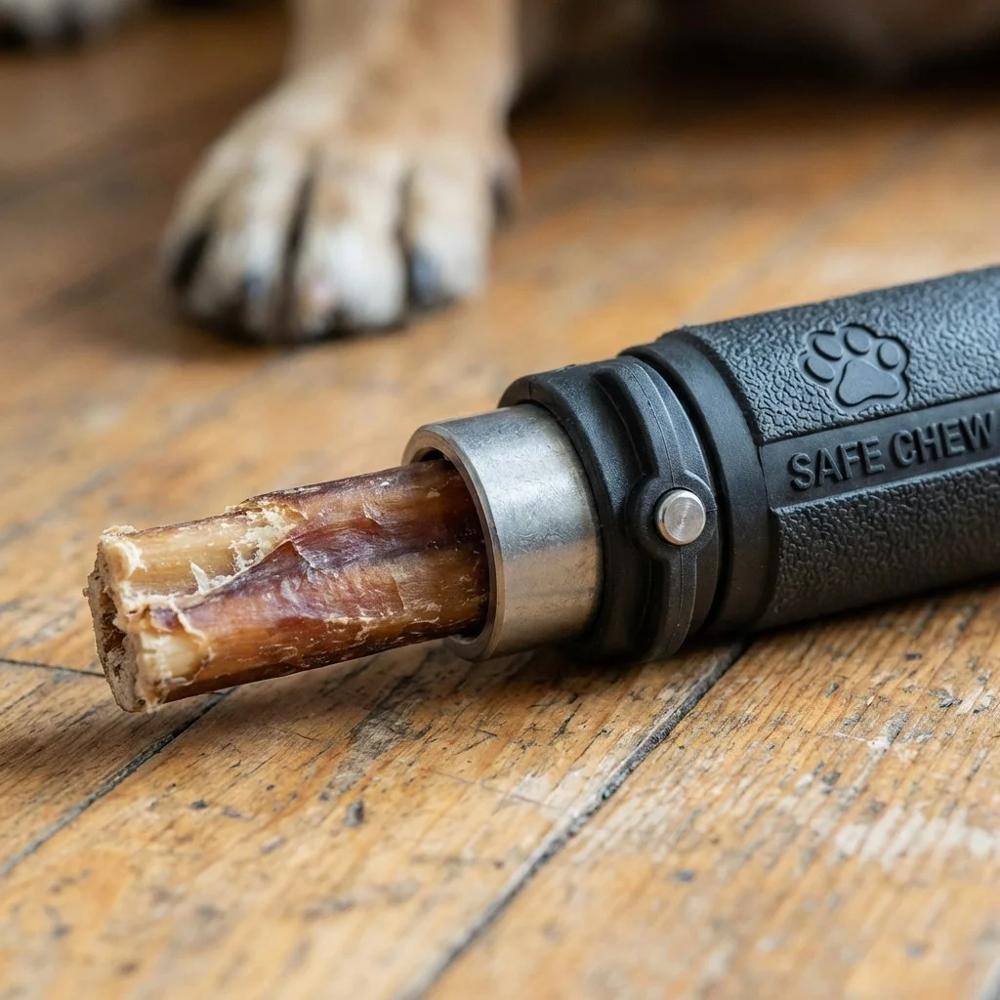
A safety holder is a mechanical device that grips the end of a chew, making it physically impossible for the dog to reach the final nub. By providing a "handle" or a weighted base, these tools ensure that the dog can only gnaw on the exposed portion of the treat.
Types of Holders
1. Screw-Locking Devices
These are often considered the "gold standard" for safety. They feature a heavy-duty plastic or rubber housing with a center hole and a plastic screw. You insert the chew and tighten the screw until it bites into the material. These are excellent for Standard Bully Sticks (6”, 9”, 12”) because they provide a vice-like grip that even the strongest jaws cannot pull free.
2. Friction-Grip Holders
These holders rely on the natural tension of tough rubber. They typically look like a ball or a bone with a tapered hole through the center. You jam the chew into the hole, and the friction holds it in place. While effective for many, extremely motivated "gulpers" may eventually pull the stick out if the fit isn't perfect.
3. Multi-Functional Chew Toys
Some rubber toys are designed with hollow centers specifically to hold treats. These are excellent for How to Make Bully Sticks Last Longer, as they limit the surface area the dog can access, forcing them to work harder for their reward.
Matching the Holder to the Chew
Not all holders are universal. Choosing the right combination is critical for safety.
- For Thick Chews: If you provide Thick Bully Sticks or Best Bully Sticks for Large / Aggressive Chewers, you must ensure the diameter of the holder's opening is wide enough to accommodate the treat but tight enough to secure it.
- For Small Dogs: Best Bully Sticks for Small Dogs are often thinner. A holder designed for a Great Dane will not safely grip a thin stick, as the dog may simply pull it through the gap. Use a size-appropriate holder to maintain a secure lock.
- For Irregular Shapes: Braided Bully Sticks and Curly Bully Sticks offer great dental benefits, but their irregular shapes make them difficult to fit into standard screw-lock holders. For these, a flexible friction-based holder is usually a better fit.
For more help on sizing, see How to Choose the Right Size Pizzle for Your Dog.
Veterinary Consensus on Safety Holders
From a clinical perspective, Vet Opinions on Bully Sticks are generally positive regarding their nutritional profile and dental benefits. However, the number one concern cited by veterinarians is the "foreign body obstruction" caused by swallowing large pieces.
Veterinary professionals almost universally recommend the use of a safety holder for dogs that have a history of "inhaling" their treats. By using a holder, you transform a potentially high-risk activity into a safe, mentally stimulating exercise. Vets also emphasize that holders prevent the treat from sliding down the throat if the dog happens to jump or move suddenly while chewing.
Essential Safety Tips for Using Holders
Even with the best equipment, safety requires owner diligence. Follow these guidelines:
- Always Supervise: No device is 100% fail-proof. Always watch your dog while they are using a holder.
- Check for Wear: Inspect the holder regularly. If the plastic screw is stripped or the rubber is cracked, replace it immediately to prevent the dog from swallowing pieces of the holder itself.
- Clean Regularly: Saliva and food particles can lead to bacterial growth. Most high-quality holders are dishwasher safe, but check the manufacturer's instructions.
- Remove the "Nub": Once your dog has chewed down to the holder, take the device away and manually remove the remaining small piece. You can either discard it or, if it is soft enough, supervise your dog while they eat that final bit.
- Fresh Water Access: Chewing is hard work and increases thirst. Always ensure your dog has a bowl of fresh water nearby.
Summary and Key Takeaways
Using a holder is one of the most effective ways to ensure your dog's chewing experience is both enjoyable and safe. It eliminates the most significant hazard associated with natural chews: the risk of choking on the final piece.
- Safety First: Holders prevent "gulping" and potential gastrointestinal blockages.
- Match by Size: Ensure the holder is compatible with the thickness of your chew, whether you use Thick vs Thin Bully Sticks or standard sizes.
- Instinctual Protection: Holders counteract the dog’s natural drive to swallow small items whole.
- Vet Recommended: Most veterinarians suggest holders for "power chewers" to avoid emergency surgeries.
- Supervision is Key: Never leave a dog unattended with a chew, even when using a safety device.
By investing in a high-quality holder and following these safety protocols, you can provide your dog with the nutritional and mental benefits of natural chews with total peace of mind.