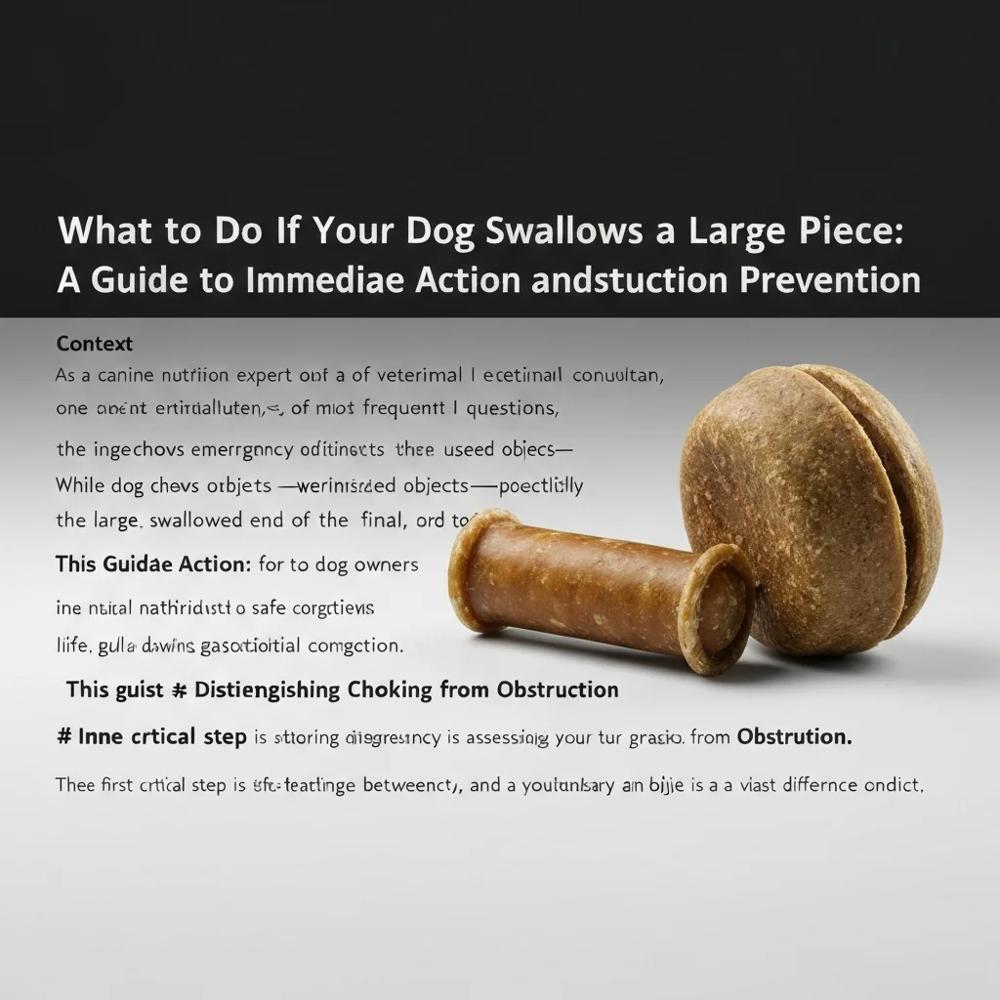
What to Do If Your Dog Swallows a Large Piece
It is a scenario that strikes fear into the heart of even the most experienced dog owner: you are relaxing while your dog enjoys a chew, only to look down and realize the last two or three inches of the treat have vanished in a single "gulp."
As a canine nutrition expert, I often consult with owners who are panicked in this exact moment. Whether it is a piece of a bully stick, a tendon, or a dental chew, the internal question is always the same: Is my dog going to be okay, or is this a medical emergency?
Understanding how to react, what to look for, and why dogs exhibit this behavior is essential for every responsible pet parent. This guide will walk you through the immediate steps to take and the long-term monitoring required when your dog swallows a large piece of a chew.
The "Gulping" Phenomenon: Why It Happens
Before we dive into the "what to do," we must understand the "why." Dogs are evolutionarily designed to consume food quickly. In the wild, "wolfing" down food was a survival mechanism to prevent other pack members or scavengers from stealing a kill.
Even in the comfort of a modern home, many dogs retain this instinct. This is especially common in households with multiple pets, where a dog may feel the need to "finish" their treat quickly to protect it. Furthermore, as a chew becomes saturated with saliva, it becomes slippery. If a dog is an enthusiastic chewer, the piece can easily slide down the throat before they have had a chance to break it down further.
When it comes to natural chews, the risk varies based on the material. For instance, knowing Is Pizzle Digestible? is vital because a highly digestible material is far less likely to cause a long-term blockage than a synthetic or poorly digestible one.
Immediate Action: The First 5 Minutes
If you witness your dog swallow a large piece, the first rule is to stay calm. Your dog picks up on your anxiety, and if they are currently struggling, your panic can escalate their heart rate and respiratory distress.
1. Check for Active Choking
There is a significant difference between a dog swallowing a large piece and a dog choking on one. * Choking: The dog cannot breathe, is pawing at their mouth, has blue or pale gums, or is making high-pitched wheezing sounds. * Swallowed: The dog may cough once or twice, lick their lips, and then appear completely normal.
If your dog is actively choking, you must perform the canine Heimlich maneuver or seek emergency veterinary care immediately. To understand the mechanics of this risk, see our article on Can Pizzle Cause Choking?.
2. Do Not Induce Vomiting Unless Instructed
A common mistake owners make is reaching for hydrogen peroxide to induce vomiting. Do not do this without consulting a veterinarian. If the piece swallowed is large, hard, or has sharp edges, bringing it back up the esophagus can cause more damage or lead to the object becoming lodged in the throat on the way out.
3. Offer a Small Amount of Soft Food
If the dog seems fine but you are worried about the piece "sitting" in the esophagus, offering a tablespoon of canned pumpkin or wet dog food can sometimes help provide a "buffer" and encourage the piece to move into the stomach.
Detailed Analysis: The Journey Through the Digestive Tract
Once a large piece reaches the stomach, the body’s natural processes take over. This is where the composition of the chew becomes the most important factor.
Digestibility is Key
If your dog swallowed a piece of a bully stick (also known as pizzle), the outlook is generally positive. Because What Is Pizzle? is essentially 100% beef muscle tissue, it is highly protein-based. Unlike rawhide, which can sit in the stomach for days and expand, pizzle begins to break down as soon as it hits stomach acid.
In a healthy dog, the gastric juices (which have a very low pH) will begin dissolving the collagen and protein fibers. However, if the piece is exceptionally large—say, 4 to 6 inches swallowed by a small breed—the stomach may struggle to break it down quickly enough to pass it into the small intestine.
Potential Risks: Obstruction vs. Irritation
The primary concern after the initial swallowing event is a gastrointestinal (GI) obstruction. This occurs if the piece moves out of the stomach but becomes lodged in the narrow passages of the small intestine.
Alternatively, the dog may experience "dietary indiscretion," which is simply a fancy way of saying an upset stomach. The sudden introduction of a large amount of protein and fat can cause temporary inflammation. You might notice Signs Your Dog Is Chewing Too Much Pizzle if they frequently ingest large amounts, such as loose stools or lethargy.
Veterinary Consensus: When to Call the Doctor
Most veterinarians suggest a "watch and wait" approach if the dog is acting normally, but there are specific "red flags" that require an immediate clinic visit. According to Vet Opinions on Bully Sticks, these chews are generally safe, but no treat is 100% risk-free.
Contact your vet immediately if you see: * Repeated Vomiting: If your dog cannot keep water or food down, this is a classic sign of a blockage. * Extreme Lethargy: A dog that is suddenly very weak or unwilling to move. * Abdominal Pain: If your dog winces, whines, or "hunches" their back when you touch their belly. * Lack of Bowel Movements: If 24 hours pass without a stool, or if the dog is straining to go. * Loss of Appetite: Refusal to eat their favorite meal is a major indicator of internal discomfort.
Prevention: How to Stop Future Gulping
The best way to handle a swallowed piece is to ensure it never happens again. As a consultant, I recommend a multi-layered approach to safety.
Use a Safety Device
One of the most effective tools for "gulpers" is a mechanical holder. These devices grip the end of the chew, making it physically impossible for the dog to swallow the last nub. You can explore the Best Holders to Prevent Swallowing to find one that fits your dog's favorite treats.
Size Matters
Always size up. If you have a medium-sized dog, buy "Large" or "Jumbo" chews. The longer and thicker the chew, the more time the dog has to spend breaking it down. For guidance, refer to How to Choose the Right Size Pizzle for Your Dog.
Supervised Chewing
Never leave your dog unattended with a chew. When the treat gets down to the last two inches, trade your dog for a high-value biscuit and take the "nub" away. Understanding How Long Does a Bully Stick Last? can help you estimate when you need to start paying closer attention.
Choose Highly Digestible Options
If your dog is a known gulper, avoid rawhide or synthetic bones. Stick to single-ingredient, natural options. Comparing Pizzle vs Rawhide: Which Is Safer? clearly shows that the digestibility of natural muscle tissue is a significant safety advantage.
Summary: Key Takeaways for Owners
- Assess the situation: Determine if the dog is choking (emergency) or has simply swallowed the piece (monitor).
- Monitor for 48 hours: Watch for vomiting, lethargy, and changes in appetite or bowel movements.
- Prioritize digestibility: Natural, protein-based chews are safer than synthetic ones because they break down in stomach acid.
- Invest in safety: Use holders and choose the correct size to prevent the "last-inch gulp."
- Don't hesitate to call the vet: It is always better to get a professional opinion than to wait until an obstruction becomes life-threatening.
By staying vigilant and choosing the right products, such as those discussed in How to Make Bully Sticks Last Longer, you can provide your dog with the mental stimulation they need while keeping their digestive health a top priority.